How Aggression-Based Matchmaking Actually Works in Arc Raiders
Complete breakdown of Arc Raiders' hidden ABMM system — what increases and decreases your aggression rating, how it affects matchmaking, the solo/trio bleed problem, and the exploit everyone knows about.
Arc Raiders has a hidden matchmaking system the community calls ABMM — Aggression-Based Matchmaking. Embark never named it, never documented it, and never put it in a patch note. But devs have confirmed it exists, and hundreds of hours of community testing have mapped out how it works. Here’s what we know.
Updated for the May 22, 2026 matchmaking overhaul. Embark reworked parts of this system after this guide first published. The biggest change: defending yourself is no longer treated as aggression — the system now tracks who started a fight, so returning fire when you’re ambushed isn’t penalized the way it used to be. The sections below reflect that change where it’s confirmed; the rest remains community-mapped.
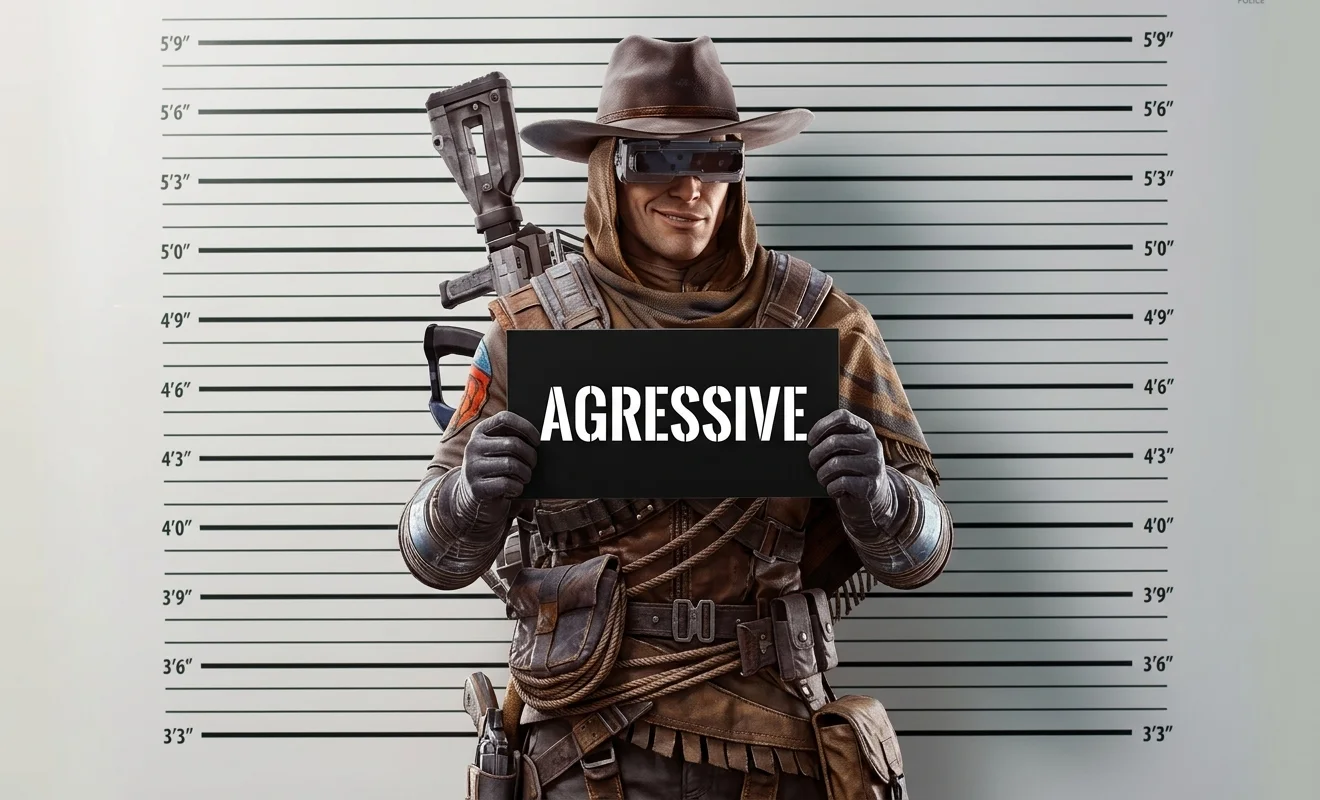
What ABMM Is
ABMM is a behavioral layer on top of Arc Raiders’ matchmaking. It tracks how much PvP you engage in across raids and uses that data to influence who you get matched with. Play peacefully, and your lobbies trend toward other peaceful players. Push fights and go aggressive, and you’ll get matched with more PvP-heavy players.
Design Director Virgil Watkins has been the most transparent, confirming that the system tracks who deals damage to other players and who shoots first. He’s also been clear about what it’s not — it’s not binary. There are no “friendly lobbies” and “aggressive lobbies.” It’s a weighted spectrum, and every lobby contains a mix of players. The system just adjusts how that mix skews.
Importantly, Watkins denied that Arc Raiders uses skill-based matchmaking or gear-based matchmaking. The only behavioral factor is PvP engagement.
What Increases Your Aggression
Confirmed by Embark — dealing damage to other raiders. Watkins confirmed the system tracks combat actions like who deals damage and who shoots first, as inputs to a weighted rating. (He’s also called “aggression-based matchmaking” a bit of a misnomer and stressed it isn’t binary, so treat damage as the main signal the community has identified, not a simple on/off switch.) Beyond that, Embark hasn’t broken down specific actions, but the community has mapped out a clear picture:
High confidence (dev-confirmed or strongly supported by testing):
- Hitting a raider — any damage dealt to another player registers. This is the baseline.
- Downing a raider — knocking someone into a downed state. Strongly believed to be a heavier signal than chip damage.
- Knocking out a raider — finishing off a downed player. Whether you downed them or a teammate did, you’re dealing the final damage and that likely counts.
- Self-defense (updated May 2026) — Originally the system didn’t assume intent: if someone shot you first and you killed them, your aggression went up just the same (Watkins, early 2026). Embark’s May 22, 2026 update reversed this — defending yourself is no longer treated as a hostile action. The system now captures who started the fight, so a Raider who only returns fire is no longer logged like the one who opened up.
- Sustained PvP across multiple raids — one fight won’t tank your rating. Watkins explicitly said it’s not as though one action does it; it’s evaluated over a series of rounds. But consistent PvP over many raids will steadily push you deeper.
Community-suspected, not dev-confirmed:
- Looting raider bodies — this is the most debated action in the community. Many players swear it bumps your aggression. Watkins seemed to dismiss it as superstition but didn’t directly deny it.
- Multiple PvP engagements in a single raid weighting heavier — wiping a full trio and then fighting another squad in the same raid likely adds more than a single engagement. The system almost certainly isn’t capped per raid.
Probably does NOT increase aggression:
- Missing shots at a raider — Watkins specifically referenced tracking who “takes damage,” not who fires. If you shoot at someone and miss every round, you probably registered nothing.
- Post-match surveys — Watkins confirmed these have zero mechanical impact on matchmaking.
What Lowers Your Aggression
There is exactly one known method: complete raids without dealing any damage to another raider.
That’s it. No bonus for reviving a random. No credit for dropping loot for someone. No boost for chatting on proximity mic. No reward for wiggling at another player and walking away. The system only sees whether you dealt player damage or didn’t. Peaceful play isn’t actively rewarded — it’s just the absence of aggression.
How many clean raids does it take?
- Light aggression (occasional PvP, a few kills over recent sessions): roughly 5–10 peaceful raids
- Moderate aggression (regular PvP engagement): roughly 10–15 peaceful raids
- Deep aggression (kill-on-sight for days or weeks): 15–20+ peaceful raids
The community widely reports that aggression increases faster than it decreases. A single raid with multiple kills can reportedly undo several peaceful runs.
Key unknowns:
- Does surrendering count as a completed peaceful raid? Unknown. Most players doing reset runs extract normally rather than risk it. The safe play is to load in, do some PvE, and extract via pod or hatch.
- Does extract method matter (extraction pod vs. hatch)? No difference has been reported. Both appear to count equally.
- Does time away from the game decay aggression? No. Multiple community reports confirm that taking a break for days and coming back lands you in the same lobbies. Only peaceful raids move the needle.
Solo, Duo, Trio — The Bleed Problem
Your aggression rating almost certainly carries across all queue types. This is the community’s single biggest complaint. If you PvP in trios — where fighting is almost unavoidable — that aggression follows you into your solo queue.
A Reddit post about this issue hit roughly 9,000 upvotes, making it one of the most popular posts in r/ArcRaiders history. The frustration is straightforward: you can’t really play trios without PvP, and that means your solo experience gets punished for it.
Embark has not confirmed whether ratings are tracked separately per queue. Embark’s CEO Patrick Söderlund acknowledged party size as a separate matchmaking dimension (solos match with solos, etc.), but that’s queue separation, not aggression separation. The community operates under the assumption that it’s one shared rating.
Does Expedition Reset Your ABMM?
Unconfirmed. Many players report their lobbies feel different after completing an Expedition — but this is more likely explained by the shifting player pool after a reset (fresh loadouts, different playstyles, end-of-season population changes) rather than an actual ABMM reset.
How to Tell Where You Are
There’s no visible score, no indicator, and no in-game feedback. The community’s best proxy is queue time:
- Fast queue (~30 seconds) → likely aggressive bracket (larger player pool)
- Slow queue (~1:20+) → likely peaceful bracket (smaller pool)
This is anecdotal but widely corroborated. It makes intuitive sense — more players engage in PvP than avoid it, so the aggressive pool is bigger and fills faster.
The Exploit Everyone Knows About
Because aggression only drops through peaceful play, players have figured out the meta: run 10–15 raids on free loadouts with zero PvP engagement, reset your rating, then queue geared into the lower-aggression pool and farm peaceful players who are carrying valuable loot. Rinse and repeat.
This is the system’s most glaring design flaw. Embark is aware of it — Watkins described ABMM as “a blunt instrument” being actively refined — but no patch has addressed it yet.
The Bottom Line
ABMM is real, it’s always running, and it works on a simple principle: start fights with raiders, get matched with raider-hitters. Don’t, and you get matched with others who don’t. Downs, knockouts, and repeated PvP all feed that same damage-dealt signal — though since the May 2026 update, defending yourself when ambushed no longer counts against you. There’s no shortcut back to the peaceful pool except stacking calm raids, and there’s no positive action that earns you credit. The system is blunt, exploitable, and imperfect — but it’s also the only thing in the extraction shooter genre that lets PvE-focused players have a meaningfully different experience from PvP hunters.
Embark has the telemetry to make it smarter (they already track who shoots first), and Watkins has signaled that refinement is ongoing. For now, play accordingly.
- ABMM tracks PvP damage you deal across raids and matches you with similarly aggressive players
- Self-defense no longer counts as aggression — since the May 2026 update, the system tracks who started the fight
- 5-10 peaceful raids to reset light aggression, 15-20+ for deep aggression
- Your aggression rating likely carries across solo, duo, and trio queues
- Queue time is the best proxy: fast queues (~30s) suggest aggressive bracket, slow (~1:20+) suggest peaceful
- The system is exploitable: reset with peaceful free-loadout runs, then farm the lower-aggression pool
Explore Our Tools
More Articles

Anvil Splitter: What You Need to Know
What the Anvil Splitter actually does in Arc Raiders: the 4-pellet damage math, why it doesn't out-kill a bare Anvil on most targets, the Rocketeer Flipper trick that justifies keeping one, and how it stacks up against the Il Toro.

The Complete Guide to Trigger 'Nades in Arc Raiders
How the Trigger 'Nade works in Arc Raiders, why two guarantees a kill, extraction ambush setups, PvE combos, what the Patch 1.11.0 + 1.26.0 nerfs changed, and how it compares to every other grenade.
Arc Raiders Close Scrutiny: The Complete Guide
Everything you need to know about Close Scrutiny in Arc Raiders. How Assessors work, Vaporizer weak points, exclusive loot drops, solo strategies, and the loadout that covers all threats.